Knee recovery
How long should you use an ice machine after knee replacement surgery
Almost every surgeon tells you to ice your knee after a total knee replacement. Far fewer explain how long each session should run, how many times a day, or the point at which icing stops helping and starts getting in the way. That gap is where most people either overdo it or give up too early.
This guide sets out what the general clinical consensus says about using a cold therapy machine after knee replacement surgery. It is written for people recovering at home in Perth. It is general information, not a substitute for the specific protocol your own surgeon or physiotherapist gives you.
Why cold therapy matters after a knee replacement
A knee replacement is major surgery and the body responds with swelling and pain. Cold therapy works by narrowing the blood vessels around the joint, a process called vasoconstriction. That limits the flow of inflammatory fluid to the surgical site and slows the nerve signals that carry pain, which is why a cold knee often feels calmer and less tight.
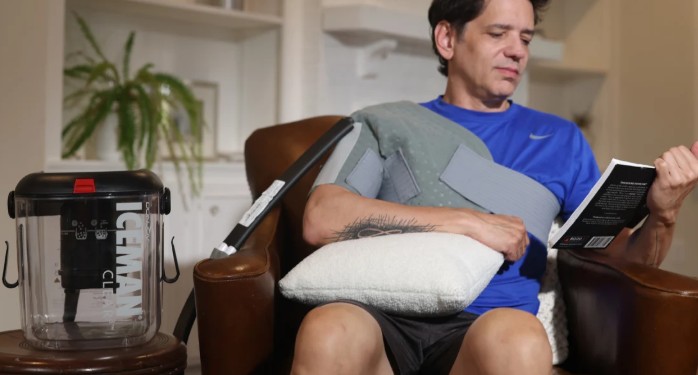
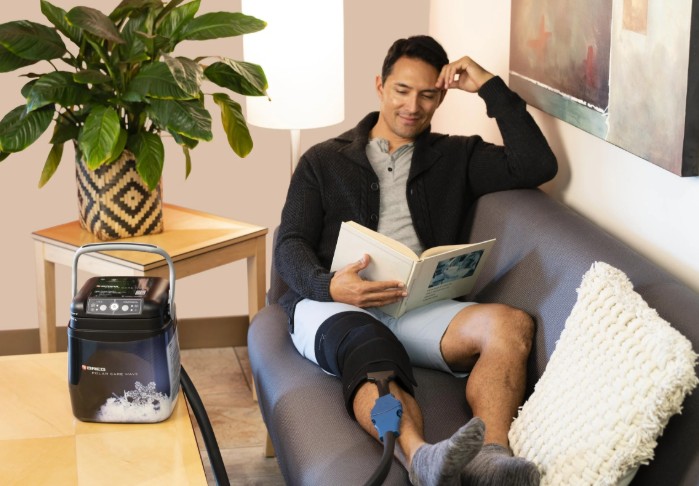
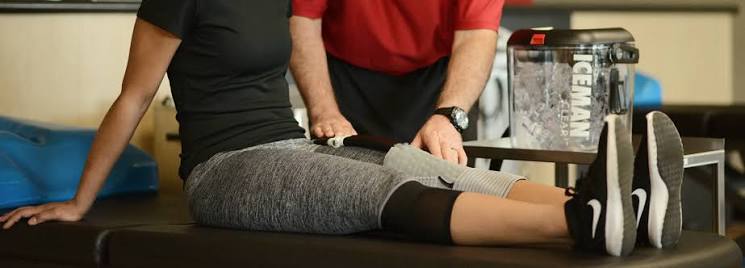
A motorised cold therapy machine holds a steady temperature and, in many units, adds gentle compression. Unlike a bag of ice that warms up within half an hour, a machine keeps the cooling consistent, which is the part that actually drives the benefit.
How long each session should last
The common clinical recommendation is 15 to 20 minutes per session, and some protocols extend to around 40 minutes with a proper barrier in place. Longer is not better. Once the tissue is cold, extra time adds risk without adding benefit.
Always let the skin return to its normal temperature between sessions. That rest window lets healthy blood flow return to the area, which is part of how tissue heals.
How often to ice, and for how many weeks
In the first two to three weeks, icing three to four times a day is commonly advised, and some protocols go more frequently during the worst of the early swelling. As the swelling settles you can taper down.
Most people are guided to keep using cold therapy for the first two to six weeks. If swelling lingers, some protocols continue up to around twelve weeks. The right end point depends on your own progress, so follow your surgeon rather than a fixed calendar.
Staying safe while you ice
Never place the pad straight onto bare skin. Always use a thin towel or the barrier supplied with the wrap to avoid an ice burn. Check the skin under the pad regularly for redness, blistering or unusual colour, and stop if you notice numbness, tingling or increasing pain.
It is generally advised not to fall asleep with a machine running, because you cannot monitor your skin while you sleep. Cold therapy is also not suitable for everyone, particularly people with diabetes or poor circulation, so confirm it is right for you before you start.
Hiring a cold therapy machine in Perth
Buying a unit for a few weeks of recovery rarely makes sense. Hiring gives you clinical-grade cooling for the exact window you need it, then you hand it back. APE Recovery hires the ICEMAN Clear3 and the Polar Care Wave across the Perth metro area with free delivery, and we can have a unit ready before your surgery date so it is waiting when you get home.
If you are booking around a planned knee replacement, arrange the hire about a week ahead so the machine and the right knee wrap are on hand from day one.
Sources we referenced
- How long to use cold therapy after surgery, Orthobracing resources
- Optimal icing duration and frequency after knee replacement, LIV Hospital
- Cold therapy and inflammation research, PubMed Central
This article is general information and is not medical advice. Always follow the specific recovery protocol given by your surgeon or physiotherapist.